Planning Website Content Before a New Build
Content is the most common cause of delayed website projects. Planning it early gives you a better site, sooner.
Verity Consultants · 18 October 2026 · 9 min read
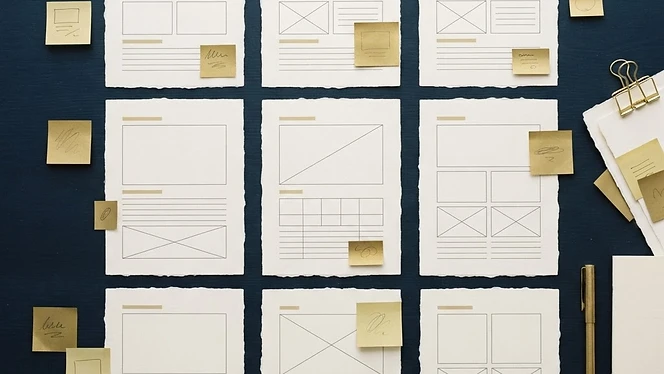
The design of a website gets most of the attention, but content is what visitors actually read and what search engines index. It is also one of the most common reasons website projects slow down.
Planning content before the build starts gives your designer something real to design around and helps the site launch with substance rather than placeholder text.
Step 1: Agree what the site needs to achieve
Write down the main actions you want visitors to take, such as calling, booking, requesting a quote or visiting. Every page should support at least one of these.
Then describe your main types of customer and what each needs to know before contacting you.
Step 2: Map your pages
A sitemap is simply a list of pages and how they fit together. A typical service business might start with:
- Home
- A page for each main service
- Location pages, where you genuinely serve distinct areas
- About
- Work or case studies
- Articles or guides, if you will maintain them
- Contact
Our guide to how many pages a business website should have explains how to judge this for your business. Separate pages work best when each answers a distinct question; see local SEO landing pages and search architecture.
Step 3: Plan each page's purpose
For each page, note:
- Who it is for.
- The question it answers. For example, "Do you fit garden rooms in Knutsford, and roughly what does it involve?"
- The main action. Usually an enquiry.
- Supporting evidence. Photos, reviews or examples.
This short brief prevents pages that all say the same thing.
Step 4: Write the core pages first
Service pages
These usually matter most for enquiries and search. A useful service page explains:
- What the service is and who it suits.
- What is included and how the process works.
- What affects price or timescale, without inventing figures.
- Common questions.
- Proof, such as projects or reviews.
- How to get in touch.
Homepage
The homepage introduces your business quickly and directs people to the right service. It does not need to explain everything.
About page
Explain who you are, how you work and why customers choose you. Real people and real details build trust.
Step 5: Gather photography and evidence
Genuine photographs of your work, premises and team are usually more persuasive than stock imagery. Start collecting early. Gather testimonials with permission and note any accreditations you can genuinely evidence.
Step 6: Think about search, naturally
Use the words your customers use. If people search for "boiler servicing", say that rather than an internal term. Each page should have one clear topic. Avoid repeating keywords unnaturally; Google's guidance on creating helpful content focuses on usefulness to people.
Step 7: If you are replacing a website
Review which existing pages attract visits before rewriting or removing them, and plan redirects for any address changes. Our website redesign SEO checklist covers this.
Who writes the content?
| Approach | Advantages | Considerations |
|---|---|---|
| You write it | Your knowledge and voice | Time, and objectivity about what customers need |
| You draft, a professional edits | Accurate and polished | Needs drafts on schedule |
| Professionally written | Consistent and structured | Needs your input and fact-checking |
- Approach
- You write it
- Advantages
- Your knowledge and voice
- Considerations
- Time, and objectivity about what customers need
- Approach
- You draft, a professional edits
- Advantages
- Accurate and polished
- Considerations
- Needs drafts on schedule
- Approach
- Professionally written
- Advantages
- Consistent and structured
- Considerations
- Needs your input and fact-checking
Whichever approach you choose, someone in the business should check every page for accuracy.
Common content mistakes
- Starting design with placeholder text and writing content last.
- Copying text from competitors or manufacturer brochures.
- Very short service pages that say little beyond the service name.
- Near-identical location pages with only the town name changed.
- Promises the business cannot keep, such as guaranteed response times.
- No clear next step at the end of pages.
A content planning checklist
- Website goals and main actions agreed.
- Page list agreed.
- Short brief for each page.
- Service pages drafted.
- Photos and testimonials gathered.
- Existing valuable pages identified, if redesigning.
- Final copy checked for accuracy.
Next steps
Content planning affects both cost and timing; see how long it takes to build a business website. Our web design process includes structure and content planning, and you can start your project when you are ready.
Discuss your website project
Tell us what your business needs and we'll explain how we'd approach it — no obligation.
Start your projectRelated reading


Website Accessibility Basics for Small Businesses
An accessible website works better for everyone. Here are the essentials small businesses should understand and check.
Read article

Writing a Contact Page That Generates Enquiries
Your contact page is where interest becomes an enquiry. Small changes here can make a real difference.
Read article

How to Choose a Website Design Company in the UK
Choosing a web designer is a business decision, not just a creative one. Here is how to compare options with confidence.
Read article